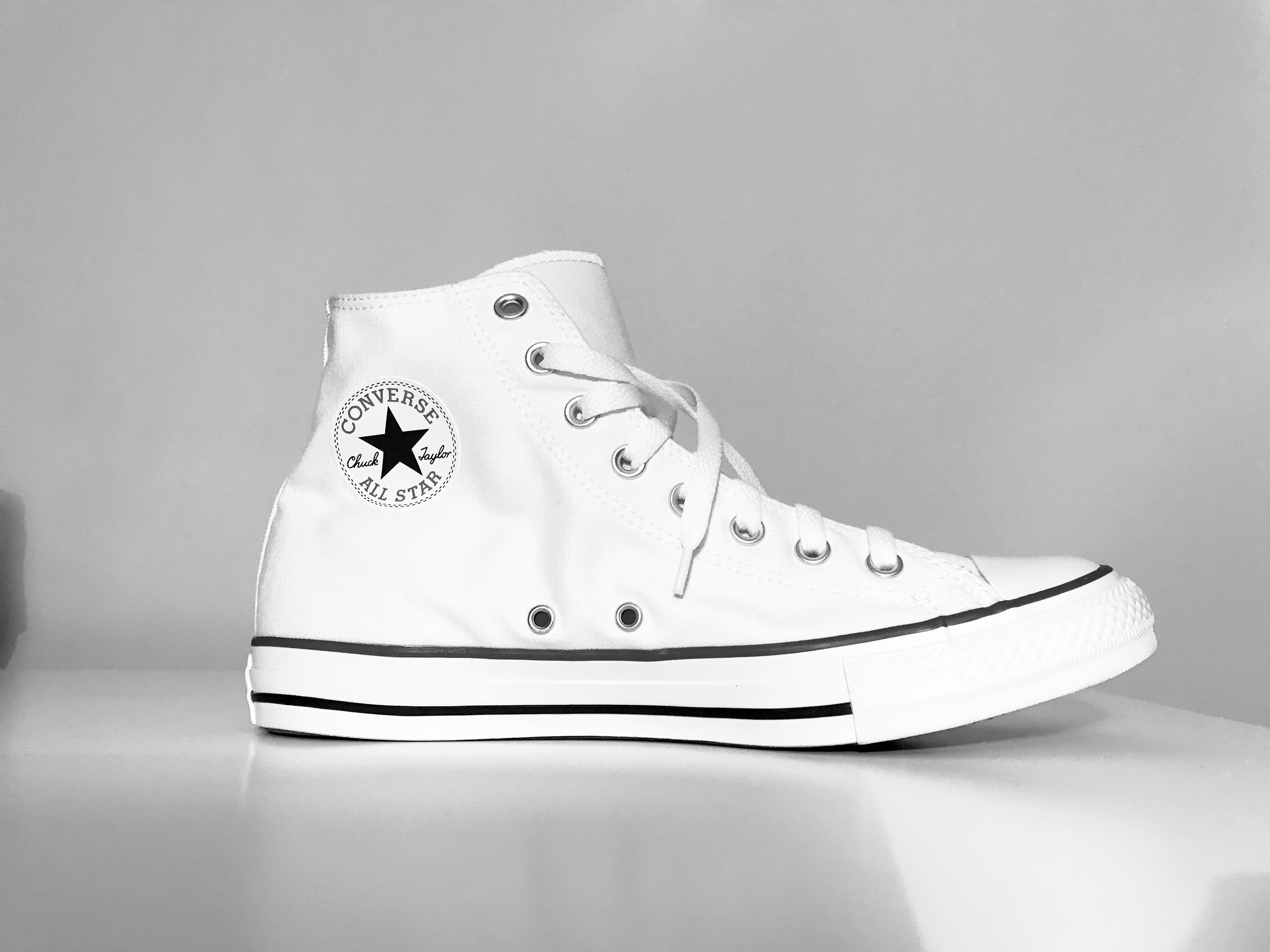
Chuck Taylor’s are trending. What do Marty McFly, Paul Walker, Will Smith, and Vice President Harris have in common? Style.
Each has helped keep the Converse brand alive over the last 100 years by simply wearing the same All-Stars that your great grandfather wore. So how does Converse continue to win new generations of consumers without Air Jordan-like ad budgets or innovating the canvas and rubber design? Let’s unbox some history.
ORIGIN STORY.
Children are savages. There is a game called “Duck On A Rock” where a stone (the “duck”) is placed atop a large rock and a child must guard the “duck” while other children throw rocks to try knocking off the duck. In addition to a thick skull, players must be coordinated, agile, and throw a rock with just the right amount of touch past their friends head to hit their mark. Why, this sounds a whole lot like the game of basketball? You are probably not wondering. Yet this sadistic Lord of the Flies-esque game is what influenced Dr. James Naismith, who at the time as a bloodied little boy in 1800’s Canada would grow up to invent the game of Basketball.

FROM CHUCKING ROCKS TO ROCKING CHUCKS.
Basketball players need to stop on a dime, pivot, jump, and traverse the court for four quarters of time. That sounds accurate, but don’t trust me. I suck at the sport. So to equip players in the early 1900s with proper footwear, they needed rubber. Enter Marquis Mills Converse.
Converse, a flailing rubber inventor, repurposed his rubber manufacturing plant to design a shoe in 1908. Nine years and many sprained ankles later the Converse All-Star high top sneaker was born.
THE JOHNNY APPLESEED OF BASKETBALL.
By 1934, you could hear All-Stars squeaking across every basketball court in the country. The rise in popularity of the All-Star was all thanks to a guy named Chuck.
Charles “Chuck” Taylor toured the country playing semi-professional basketball and becoming the #1 Converse salesman along the way. In each city, Taylor would instruct gym teachers and athletes on the fundamentals of basketball and the importance of proper footwear.
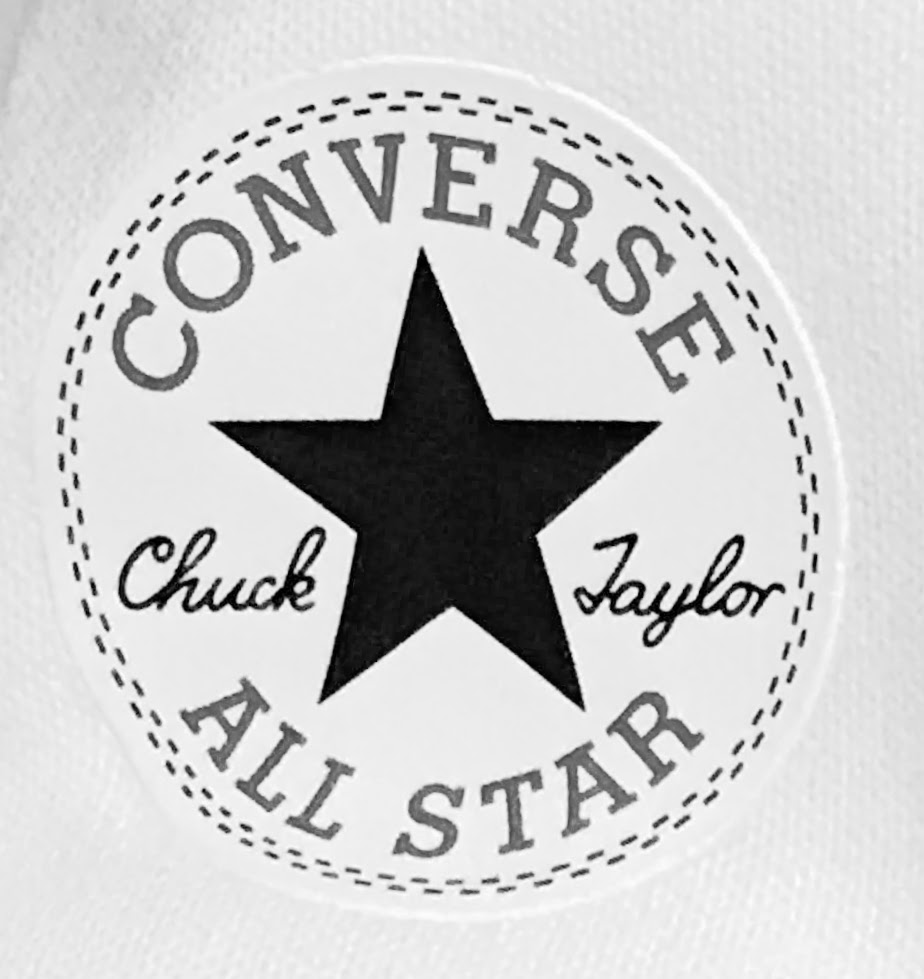
After each clinic, you’d find Chuck court-side slinging bulk orders of Converse All-Star’s before hitting the showers. Taylor’s work as an “all-star” salesman and his advancement of the game was rewarded by Converse forevermore etching Taylor’s signature on the All-Star emblem, birthing the iconic nickname for the sneaker “Chuck Taylor’s.”
SAME SHOE 100 YEARS LATER.
Chuck’s remain unchanged and unwavering. You won’t find them on the court anymore, yet everyone from teenyboppers, start-up bros, suburban dad’s clinging to punk-rock days, to Madam Vice President Harris remain Converse faithfuls.
So how does a simple canvas and rubber shoe that your great-grandfather wore compete against the likes of Air Jordan, Yeezy’s, or Fila Dinostompers? (seriously Fila, why is this a thing?)
Brands that survive history like Converse, Levi’s (1853), Brooks Brothers (1930), and LL Bean (1912) rely on versatility and eternal stylishness that outlives whatever fad social media lobotomizes into our eyeballs. Each generation creates their own connection to these brands by taking what their nerdy high-tops and khakis wearing father wore and showing him that your cool is the new rule.
Marty McFly’s Chucks carried him to the future and back. Paul Walker’s Chucks slammed down the gas pedal in Fast and Furious. Will Smith’s pair helped him defeat rogue robots in iRobot. And Vice President Harris used her Chuck’s to kick through the glass ceiling to the White House.
And me? Well, I wear Chuck’s to keep life simple.

Thank you for reading.
 K.C. Clark
One thought on “How A Game Called ‘Duck On A Rock’ Birthed The All-Star.”